

Подробный разбор по теме в нашем закрытом телеграмм канале ВЭД Логика. В чате можно задать вопрос, посоветоваться с экспертами, поделиться новостью.
The latest news on airports globally, with updates on financing, infrastructure expansion and sustainability initiatives.
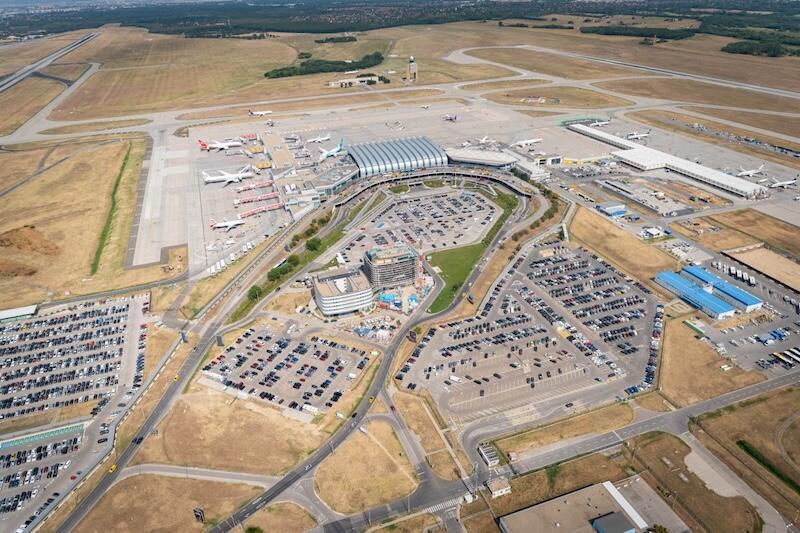
Budapest Airport (BUD) broke ground on construction of a new passenger terminal, the central component of €1 billion ($1.8 billion) in planned expansion projects over the next decade. The main terminal—encompassing check-in facilities, security screening areas and a concessions area—will span 35,000 m² (376,737 ft.²). BUD, managed by Vinci Airports, will additionally build a 19,000-m² passenger gate pier and expand aircraft apron areas by more than 132,000 m². This will include 13 new aircraft stands and a dedicated deicing area. BUD handled nearly 20 million passengers in 2025. The expansion will increase capacity by 10 million annual passengers, according to Vinci.
FedEx broke ground on an air cargo hub at Navi Mumbai International Airport (NMI), Mumbai’s new $2 billion air gateway. The facility will span 300,000 ft.² and “serve as a regional hub connecting India to Southeast Asia, West Asia, Europe and the U.S.,” FedEx said. “The hub leverages [NMI’s] multi-modal infrastructure to strengthen Western India’s international trade corridor.”
Centralny Port Komunikacyjny (CPK), Poland’s flagship transport infrastructure project combining a new international airport with a nationwide high-speed rail and road network, received six bids from potential contractors to supply passenger boarding bridges. Located between Warsaw and Lodz, CPK is envisioned as the largest airport in Central and Eastern Europe and one of the top 15 hubs in Europe. Six applications to win the concession to supply passenger boarding bridges were submitted. Bidders include a consortium of the Polish company Sezo Invest and Singaporean ShinMaywa; FMT Sweden AB; Albert Ziegler GmbH from Germany; Adelte Airport Technologies and TK Airport Solutions from Spain; and the Polish branch of the Spanish company Comsa Instalaciones y Sistemas Industriales. “The selected contractor will equip the passenger terminal building with 92 passenger boarding bridges … which will facilitate movement between the terminal and aircraft, enhancing passenger safety and comfort,” CPK said. “The contractor will be responsible, among other tasks, for developing the detailed design, including workshop documentation. Once the designs have been agreed and approved by the company, the contractor will proceed with production, followed by the delivery, installation and commissioning of the boarding bridges, and will also be responsible for their maintenance once the airport opens.” As a comparison, Warsaw Chopin, Poland’s largest airport, has 27 passenger boarding bridges. London Heathrow has more than 130. CPK aims to open in the early 2030s.
IATA and the Spanish Airline Association called for an annual reduction of 4.9% (excluding inflation) in Spanish airport charges over the 2027-31 period, which the organizations said is “a level compatible with maintaining an airport investment plan of nearly €10 billion ($12 billion) over the same period and enhancing Spain’s economic competitiveness.” In contrast, Spanish airports operator AENA has proposed an annual increase of 3.8% (excluding inflation) for the five-year period. “Airlines reject this proposal, citing AENA’s consistent underestimation of traffic growth and the excessive regulated returns it has earned during previous regulatory periods,” IATA said. «AENA has gamed the regulatory system for years, earning millions of euros more than it should have, at the expense of passengers, airlines and the Spanish economy. This must stop. AENA has generated excessive returns through a creative approach to forecasting, and its request for further increases is absurd. If granted, it would deliver the highest regulated return of any comparable airport operator in Europe … Our proposal for a 4.9% cut in charges will improve Spain’s competitiveness as an international destination, stimulating investment and job creation across the wider economy,” IATA said.
The Israeli government said it plans to build two new international airports, one in the southern Negev region and one in the country’s north. The government said the airports will be established in parallel and will be complementary to Tel Aviv Ben Gurion Airport, which handles around 40 million passengers annually.